ISOC-8.1.4.1 Safety First: Laboratory Apparatus, Safety Protocols, and Hazard Symbols
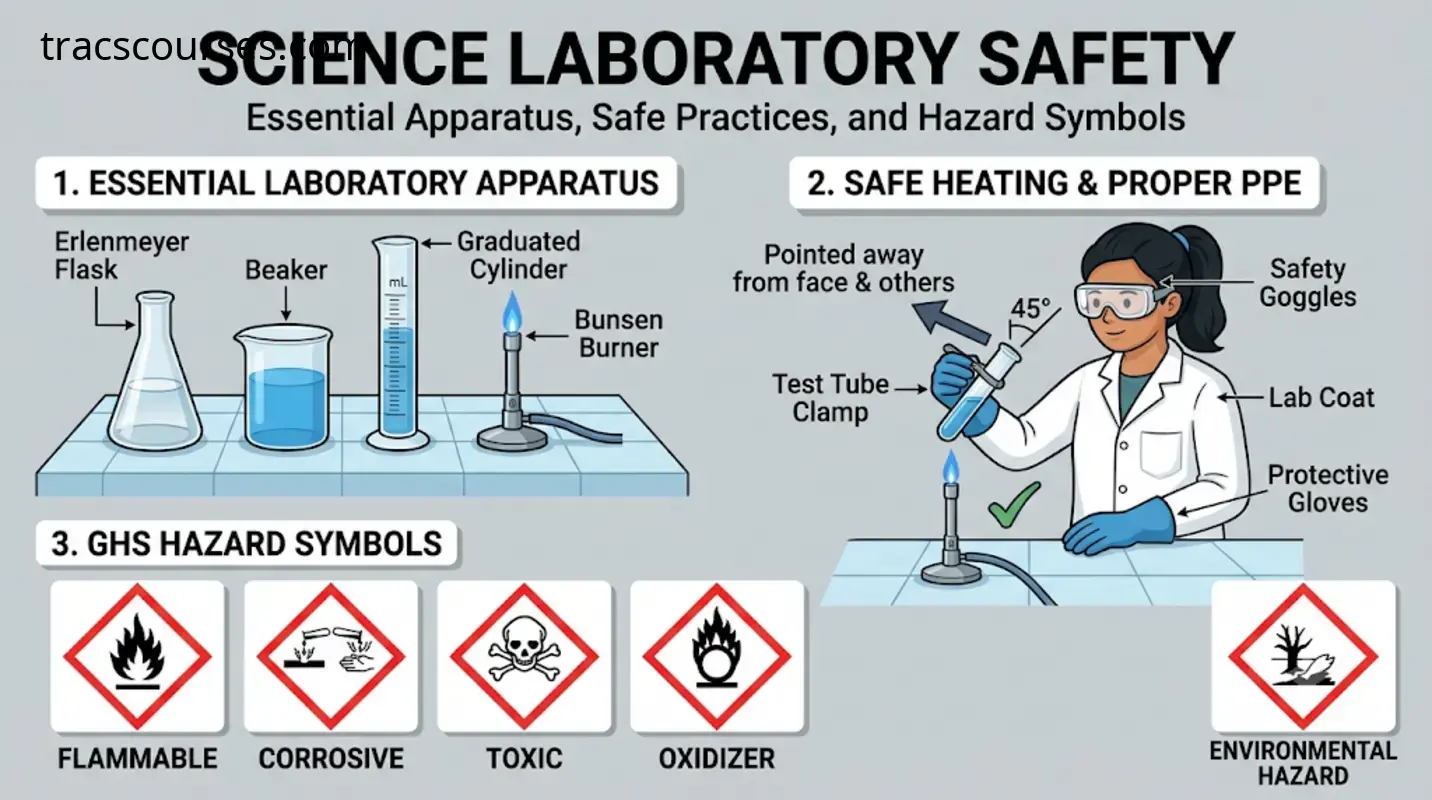
Laboratory investigations require specialized apparatus designed for precise heating, mixing, measuring, and handling of chemical substances. Common glassware and equipment include beakers, Erlenmeyer flasks, test tubes, Bunsen burners, wire gauzes, and graduated pipettes. Safely operating these tools requires an understanding of their specific functions and thermal limits; for example, borosilicate glassware must be inspected for hairline fractures before being subjected to direct flames, and test tubes must always be held with test tube clamps angled away from people while heating.
Maintaining a safe investigative environment depends on strict adherence to established laboratory safety protocols. Personal Protective Equipment (PPE)—including splash-proof chemical goggles, heat-resistant gloves, and laboratory coats—provides an essential barrier against thermal burns, chemical splashes, and flying debris. Standard operating rules prohibit eating, drinking, or running in the lab, and dictate emergency responses such as the immediate use of eyewash stations, safety showers, fire blankets, and sand buckets during chemical spills or accidental fires.
Standardized internationally recognized hazard pictograms communicate chemical risks instantly, eliminating language barriers in laboratories worldwide. Common Globally Harmonized System (GHS) symbols include the flame (indicating flammable or combustible substances), the flame over circle (oxidizers), the corrosive symbol showing corroding metal and skin (acids and bases), the skull and crossbones (acute toxicity), and the environmental toxicity symbol depicting a dead tree and fish. Recognizing and interpreting these hazard warnings ensures that students and scientists handle reactive reagents with appropriate containment and precautions.
ISOC-8.1.4.2 Separating Myth from Reality: Empirical Evidence and Scientific Skepticism
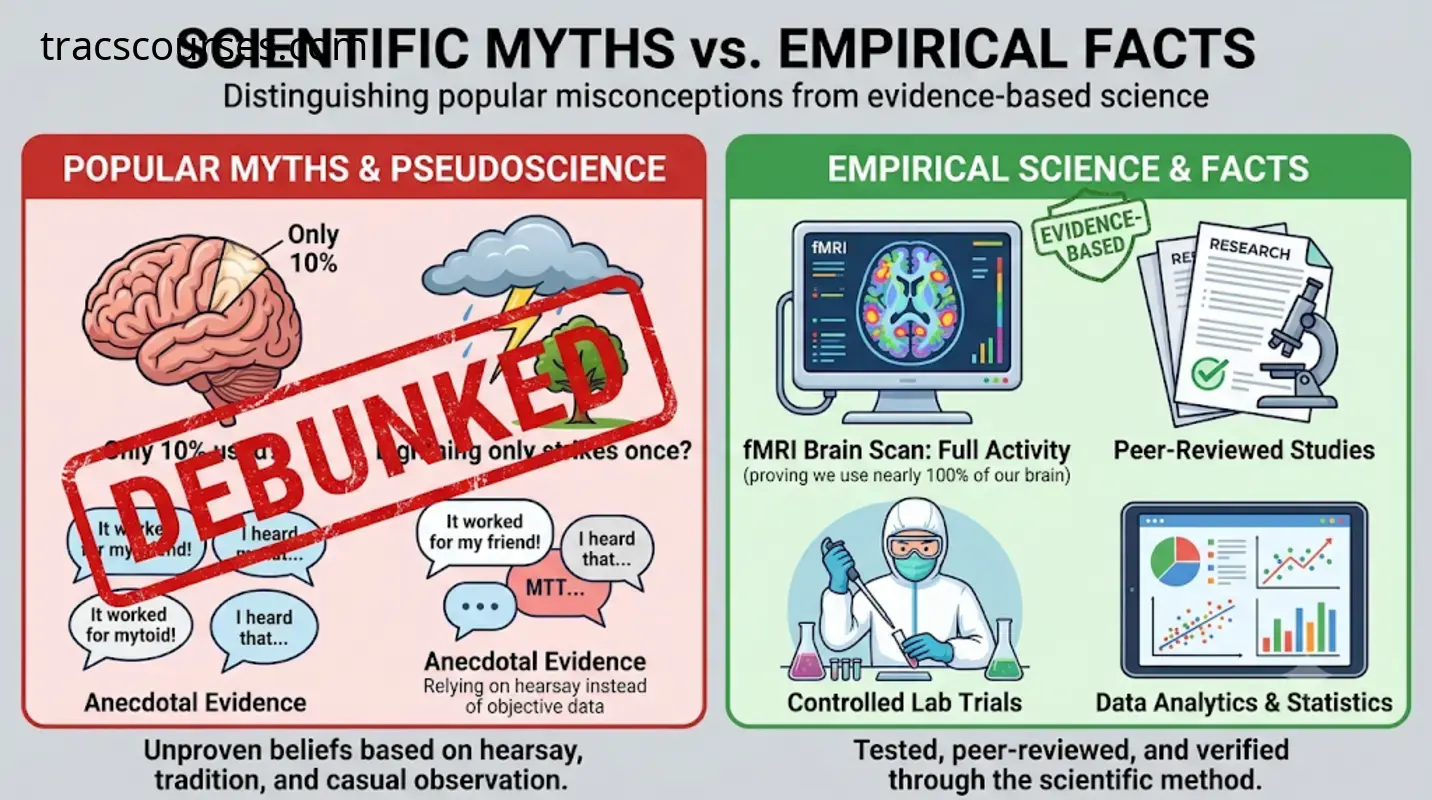
Science progresses by questioning assumptions and testing beliefs against observable physical evidence. Throughout history, widespread folklore, cultural superstitions, and anecdotal tales have frequently been mistaken for scientific truths. Common misconceptions—such as lightning never striking the same spot twice, sugar directly causing hyperactivity, or humans using only ten percent of their brain capacity—often spread rapidly because they sound plausible or align with intuitive human biases. The scientific method serves as a systematic filter to dismantle these persistent myths through empirical investigation.
Establishing an empirical fact requires verifiable, repeatable evidence gathered through controlled experimentation and objective observation. Unlike opinions or subjective beliefs, empirical claims must withstand rigorous testing, peer review, and independent replication by other researchers across different laboratories. Scientific skepticism encourages researchers to maintain an open yet critically demanding mindset: demanding robust experimental proof, examining sample sizes, and looking for potential experimental biases before accepting any extraordinary claim as established scientific knowledge.
Distinguishing between pseudoscience and legitimate empirical science is critical in modern society, especially regarding healthcare, technology, and environmental policy. Pseudoscience often relies on selective confirmation bias, untestable assertions, emotional appeals, and unverified testimonials, while ignoring contradicting evidence. In contrast, genuine scientific inquiry remains self-correcting; it willingly modifies or discards long-held models whenever new, higher-quality empirical data proves them incorrect. Cultivating this analytical mindset empowers learners to critically evaluate media claims and ground their understanding in verified facts.